
Why Polymer Insulators Fail on Indian Transmission Lines — and How to Specify Them Correctly
When a transmission line trips in the first heavy rain of the monsoon, the insulator is often the first component blamed. That instinct is only half right. In May 2026 the Central Electricity Authority released its Report of the Committee on addressing Insulator Failures on Transmission Lines. The committee’s finding was blunt: a large share of failures is preventable, and the same patterns appear across 220 kV, 400 kV and 765 kV systems and across utilities.
Sixty to eighty per cent of the recorded failures clustered in the monsoon. For composite polymer insulators the committee listed raw-material and manufacturing defects, designs that do not match local climate, loss of hydrophobicity of the silicone housing, and stress-corrosion cracking of the glass-fibre core. Those are specification and quality problems, not an argument that polymer technology itself has failed.
This article is written for utility engineers, EPC contractors and procurement teams who must write a tender or accept a type-test dossier. It explains how a composite insulator is built, why Indian service conditions punish weak interfaces, which standards actually matter, and what a useful quality plan looks like.
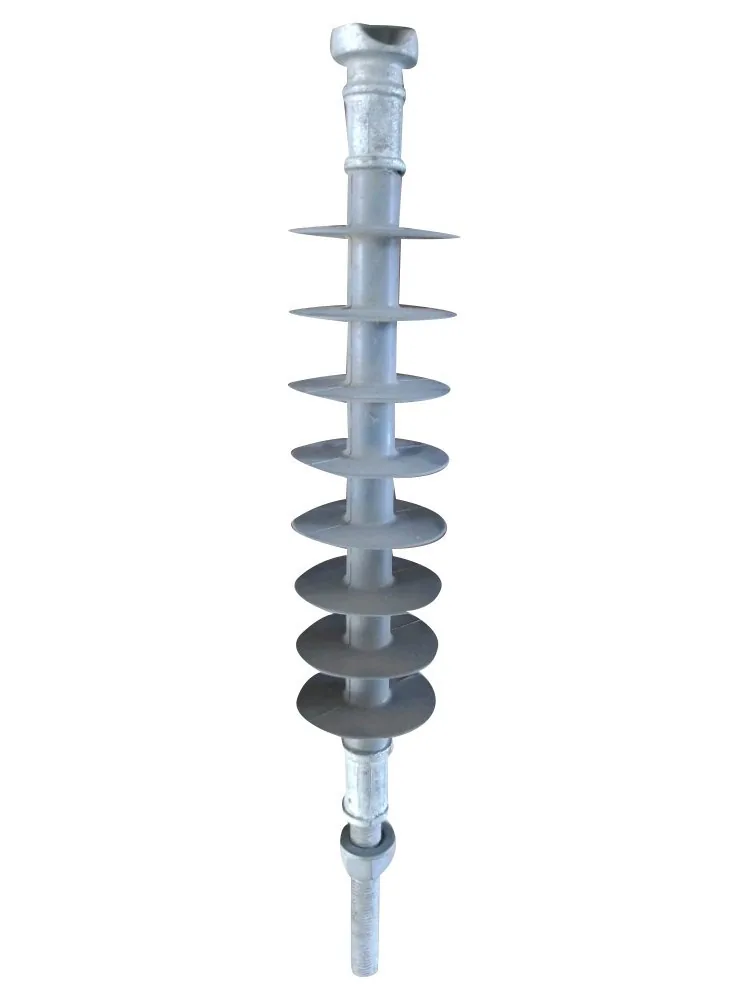
How a Composite Polymer Insulator is Built
Failure almost always starts at an interface: housing-to-core, housing-to-fitting, or fibre-to-resin inside the rod. International field investigations repeatedly show that many “polymer technology failures” are in fact bonding or sealing failures from manufacture.
IEC 61109 is the product standard for composite suspension and tension insulators above 1 kV AC (the 2025 edition also covers DC above 1.5 kV). IEC 62217 covers general polymeric insulator definitions and design tests, including tracking and erosion and hydrophobicity-related procedures. IEC TS 60815-3 guides selection of polymer insulators for polluted AC sites. Indian tenders still commonly cite IS 13134 / IEC 60815 creepage classes (typically 20 mm/kV moderate, 25 mm/kV heavy).
Three core components of a composite insulator:
What CEA actually found — and what it means on site
The committee did not treat failures as random. It linked them to environmental stress, inadequate electric-field control (missing or poorly designed corona/grading rings), material defects, and installation or maintenance gaps. It also noted non-uniform utility practice and the absence of a common quality benchmark — which is why it published a Model Quality Assurance Plan for composite polymer insulators.
For polymer units, the failure language maps onto known mechanisms:
| Mechanism (CEA / field) | What happens | What a specification should demand |
|---|---|---|
| Stress-corrosion / brittle fracture of FRP core | Moisture + acids + tensile stress attack E-glass; rod snaps with little warning | ECR glass + hydrolysis-resistant epoxy; water-diffusion and stress-corrosion tests per IEC 62217 / 61109 family |
| Loss of hydrophobicity | Silicone no longer beads water; leakage current rises in rain and fog | HTV or LSR grade with documented hydrophobicity transfer; 1,000 h tracking & erosion (IEC 62217) and ageing evidence |
| Tracking and erosion | Dry-band arcing eats sheds; creepage collapses | Adequate USCD for site pollution; shed profile per IEC TS 60815-3; tracking test on the actual housing compound |
| Interface / seal failure | Water tracks along the core; internal flashover or fracture | 100% housing coverage of the core; qualified crimp + seal; design tests that stress interfaces |
| Missing field control | Corona at the fitting on 220 kV and above damages rubber | Corona rings specified by voltage class and string geometry |
Monsoon concentration is not mysterious. Rain wets a polluted surface, leakage current forms dry bands, and any housing that has lost hydrophobicity or any core that is already damp will fail first. Coastal, industrial and agricultural belts add salt, cement dust or fertiliser films. Renewable evacuation corridors in Gujarat, Rajasthan and coastal Tamil Nadu combine high UV, heat cycling and seasonal storms — exactly the mix that exposes a weak interface.
Porcelain strings fail differently (disc flashover, string drop, bird streamers, cement ageing). Polymer units fail inside the composite if manufacture is poor. That is why “polymer vs porcelain” is the wrong first question. The first question is whether the polymer unit was designed and tested for this pollution and this mechanical duty.
Standards That Belong in an Indian Tender
A useful tender does more than write “IEC 61109”. It should name the edition, the tests, and the site conditions.
📋 Design & Type Tests
- • IEC 61109: Prefer reference to the current edition; many Indian type-test reports still use IEC 61109:2008 — record the edition on the report.
- • IEC 62217: Design tests including tracking and erosion, water diffusion on core, stress corrosion of core, hydrophobicity transfer.
- • Mechanical: Failing load and thermo-mechanical sequence as in IEC 61109.
- • For posts: IEC 61462 in addition to polymeric design tests.
🌊 Pollution & Creepage
- • IEC TS 60815-3: For polymer profile and unified specific creepage distance (USCD).
- • IS 13134 / IEC 60815: Site-pollution class. Do not default to 16 mm/kV on coastal or cement-dust corridors.
- • 33 kV Heavy Pollution: Many Indian DISCOM pin specs call 900 mm creepage on 36 kV rated units (25 mm/kV class).
🛡️ Quality System & QAP
- • CEA Model QAP: Use as backbone for raw-material identity (ECR glass, resin system, silicone batch).
- • In-process controls: Pultrusion glass content, Tg, moulding parameters, crimp force & dimensions.
- • IEC 61109:2025 updates: Tightened interface relevance & re-validation rules when materials/process change.
A Practical Specification Checklist for 11–33 kV and Above
Distribution and sub-transmission still account for most polymer pin, post and long-rod volume in India. The same checklist scales to 66–400 kV with added corona hardware and higher SML.
🔬 Materials
- • FRP rod: ECR glass, hydrolysis-resistant epoxy, stated glass content and Tg.
- • Housing: HTV or LSR silicone; state ATH or other filler only if it is part of the qualified compound.
- • Fittings: hot-dip galvanized or other corrosion system matched to coastal/industrial sites; sealed triple junction.
⚡ Electrical Ratings
- • Voltage ratings: Rated voltage and highest system voltage (e.g. 33 / 36 kV).
- • Withstand voltages: Dry and wet power-frequency withstand, lightning impulse.
- • Creepage distance: Minimum creepage tied to site pollution, not a catalogue default.
- • Shed design: Shed count and profile that can be cleaned by rain (avoid deep ribs that trap cement dust unless the site needs them).
⚙️ Mechanical
- • Load ratings: Specified mechanical load (SML) and routine test load. For 33 kV pins, 10 kN is common in DISCOM specs; posts may be 5 kN or 10 kN depending on bus arrangement.
- • Thermo-mechanical: Thermo-mechanical performance for desert and plateau temperature cycles.
📁 Tests to see in the dossier
- • Design tests on the same housing–core–fitting system.
- • 1,000-hour tracking and erosion.
- • Water diffusion / dye-penetration on the core.
- • Accelerated ageing where offered (5,000-hour programmes are used by some Indian manufacturers as additional evidence — treat them as supporting data, not a substitute for IEC design tests).
- • Sample and routine tests with traceable batch IDs.
🔧 Installation
- • Torque and handling limits (polymer sheds tear if slings are wrong).
- • Corona rings fitted as designed on 220 kV and above.
- • No field drilling or painting of housing.
Lifecycle Cost, Not Only First Price
A polymer insulator that survives 25 years without washing looks expensive on the bid sheet and cheap on the line. A unit that flashes or fractures in year six is the opposite. CEA’s QAP language is explicit: controlled materials and processes reduce failures, risk and lifecycle cost.
For polluted and coastal lines, compare:
- Number of live-line or shutdown wash cycles porcelain would need.
- Weight and tower hardware (polymer strings are lighter; handling damage is the trade-off).
- Outage cost of a brittle-fracture event on a RE evacuation line.
None of that justifies an untested low bid. It justifies paying for a documented ECR core, a qualified silicone, and a complete IEC dossier.
Where Manufacturing Capability Matters
For buyers, the useful questions to any supplier — VSL or otherwise — are the same: Is the rod ECR epoxy? Was tracking tested on this compound? Was the crimp and seal part of the design test? Does the creepage match the site pollution class? Can the process change history be shown?
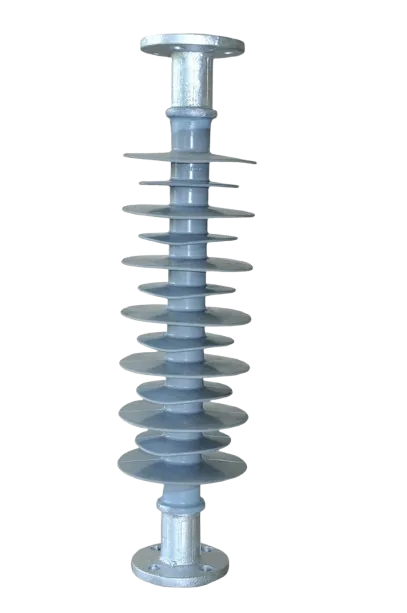
Explore VSL India's Polymer Insulator Product Range
VSL India manufactures composite polymer pin, post, and long-rod insulators designed and tested according to IEC 61109 and IEC 62217 standards.
Frequently Asked Questions (FAQ)
Did CEA say polymer insulators should not be used?
No. The committee recorded failures on both porcelain and composite fleets, noted that utilities continue to adopt polymer units on RE and coastal corridors, and focused on design, specification and quality assurance — including a model QAP for composite polymer insulators.
Why do so many failures occur in monsoon?
Wet pollution films raise leakage current. Housings that have lost hydrophobicity, cores that have taken up moisture, and fittings without proper field control all deteriorate faster when rain and humidity arrive together. CEA’s 60–80% monsoon share is consistent with that mechanism.
Is IEC 61109:2008 still acceptable?
Many Indian CPRI/ERDA reports still cite the 2008 edition. The 2025 edition extends the standard to DC and updates interface and environmental clauses. Specify the edition you will accept, and require re-validation if the supplier changed materials or process after the test date.
What creepage should a 33 kV polymer pin use in a heavy-pollution DISCOM area?
Tenders following IS 13134 heavy-pollution guidance commonly use 25 mm/kV, which on a 36 kV rated pin is 900 mm minimum creepage. Confirm the site pollution class before copying a moderate-pollution figure.
Can polymer insulators replace porcelain strings on existing towers?
Often yes, if SML, length, end-fitting type and tower clearances match, and if corona hardware is added where the voltage class requires it. Do not assume a one-for-one swap without a string and clearance check.
Conclusion: Specifying Polymer Insulators Right for Indian Conditions
CEA’s 2026 committee report should change how Indian buyers write insulator specifications. The technology is not the main problem. Unqualified cores, housings that cannot hold hydrophobicity, missing field control, and tenders that stop at a catalogue voltage rating are the problem. Write the site pollution class, name the IEC tests and edition, demand ECR glass and a sealed interface, and use a quality plan that starts at pultrusion and moulding — not at the dispatch checklist.
VSL India manufactures composite polymer insulators and the FRP cores that go inside them. Engineering and procurement teams who need 11–33 kV posts, pins and long-rod designs reviewed against IEC 61109 / IEC 62217 can share site voltage, pollution class and mechanical load at vslindia.com for a specification-level discussion.
Contact VSL India for Polymer Insulator Specifications
Business Hours
Mon - Sat: 9:00 AM - 6:00 PM