What Is FRP Grating, and Why Is It Replacing Steel Grating in Industrial Facilities?
FRP (Fiber Reinforced Polymer) grating is a lightweight, corrosion-resistant flooring and walkway material made by combining glass fibers with a resin matrix. Industrial facilities are replacing steel grating with FRP grating because it doesn't rust, doesn't conduct electricity, weighs up to 75% less, and requires very little maintenance over its service life.
This makes it easier to install and safer to operate around chemicals, moisture, and electrical equipment.
What Is FRP Grating?
The glass fibers provide structural strength, while the resin binds the fibers together and protects them from chemical attack, UV exposure, and moisture.
There are two main manufacturing methods:

How Is FRP Grating Different From Steel Grating?
Steel grating is a metal mesh or bar-panel system that offers high strength and rigidity. However, steel is vulnerable to corrosion, is relatively heavy, and conducts electricity.
FRP grating replaces metal with a glass-fiber-and-resin composite. While steel can provide higher raw strength for certain load-bearing applications, FRP offers several important advantages, including:
Corrosion resistance
Lower weight
Electrical insulation
Low maintenance
Integrated slip resistance
Easier handling and installation
In industrial environments where moisture, chemicals, saltwater, or electrical hazards are present, FRP can provide a better lifecycle solution than steel. Steel can still be the more economical choice for simple, dry, indoor applications with low corrosion risk.

FRP Grating vs. Steel Grating: Side-by-Side Comparison
| Factor | FRP Grating | Steel Grating |
|---|---|---|
| Corrosion resistance | Highly resistant to rust, chemicals, saltwater, and many acids/alkalis | Can rust and corrode without suitable coatings, galvanizing, or maintenance |
| Weight | Up to 75% lighter than steel, making it easier to handle, transport, and install | Heavy and may require lifting equipment |
| Electrical conductivity | Non-conductive | Conductive |
| Maintenance | Requires very little maintenance; no routine anti-rust coating | May require rust removal, recoating, or galvanizing maintenance |
| Installation cost | Lower labor and equipment requirements due to lighter weight | Higher handling and lifting requirements |
| Long-term cost | Can offer lower total cost of ownership in corrosive environments | Lower upfront cost but potentially higher maintenance costs |
| Slip resistance | Grit-top surfaces provide consistent anti-slip performance | Performance can vary depending on surface and corrosion condition |
| Fire performance | Fire-retardant resin grades are available | Steel is non-combustible but can lose structural performance at high temperatures |
| Lifespan in corrosive settings | Can provide 20–25+ years with appropriate resin selection and maintenance | Service life depends heavily on corrosion protection and maintenance |
| UV/weather resistance | UV-stabilized grades are available for outdoor applications | Steel itself is UV-resistant, although protective coatings can weather over time |
Why Are Industrial Facilities Switching to FRP Grating Instead of Steel?
Steel grating typically requires galvanizing, painting, or other corrosion-protection systems when exposed to moisture, saltwater, or aggressive industrial chemicals.
FRP grating is inherently resistant to corrosion because its glass fibers and polymer resin do not oxidize like iron-based metals.
This makes FRP particularly suitable for: Wastewater treatment plants, Chemical processing facilities, Petrochemical plants, Offshore platforms, Coastal facilities, and Marine environments.
With the correct resin system, FRP can withstand many corrosive environments without the recurring coating maintenance required by steel.
FRP grating is electrically non-conductive, making it useful in areas where workers operate around electrical equipment.
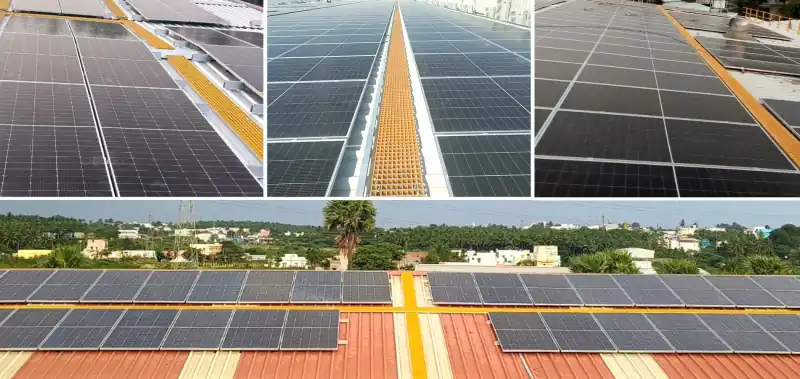
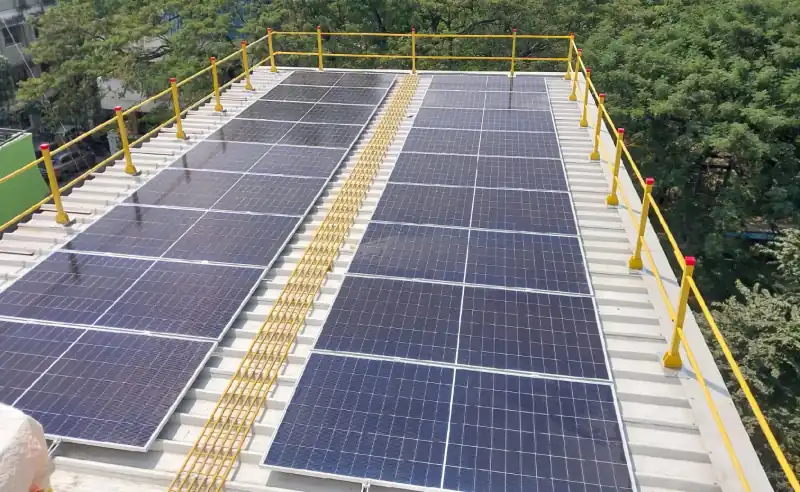
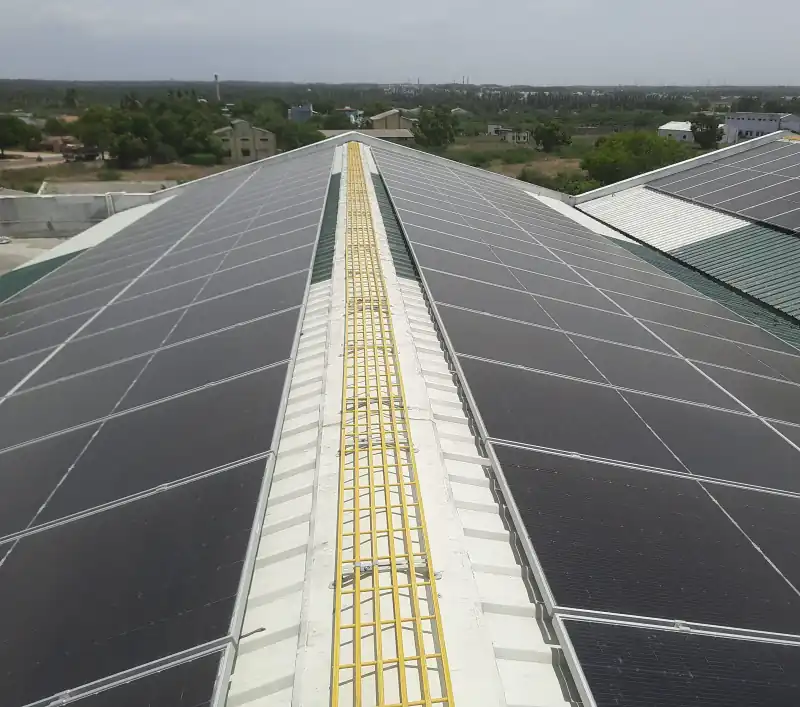
Common applications include: Solar farms, Electrical substations, Switchyards, Power plants, and Electrical equipment platforms.
Unlike steel, FRP does not provide a conductive path through the grating itself, which can help reduce electrical hazards when the material is correctly specified and installed.
One of the biggest advantages of FRP grating is its low weight. Compared with equivalent steel grating, FRP can weigh significantly less, making panels easier to Transport, Carry, Position, Cut, and Install.
The lower weight can also reduce the need for heavy lifting equipment and may reduce the structural load placed on supporting frames. For large industrial projects and rooftop solar installations, these installation savings can be significant.
FRP grating does not require routine painting or anti-rust treatment to protect it from corrosion. That can reduce long-term maintenance requirements compared with steel grating, particularly in corrosive environments.
Over a 15–25 year facility lifecycle, reduced coating, inspection, repair, and replacement requirements can contribute to a lower total cost of ownership.
Many FRP grating systems are manufactured with an integrated grit-top or concave anti-slip surface. This provides traction in environments where floors and walkways may be exposed to: Water, Oil, Chemicals, Mud, and other slippery substances.
Because the anti-slip surface is integrated into the grating, it does not depend solely on a painted coating that can wear or peel over time.
The chemical resistance of FRP depends on the resin system, concentration, temperature, and exposure conditions. Different resin systems, including isophthalic polyester, vinyl ester, and phenolic, are available for different environments.
With appropriate resin selection, FRP grating can provide resistance to many: Acids, Alkalis, Solvents, Salts, and Industrial chemicals.
This makes it particularly useful in chemical processing, wastewater treatment, and other facilities where conventional steel can suffer rapid corrosion.
Where Is FRP Grating Commonly Used?
Its combination of corrosion resistance, low weight, slip resistance, and electrical insulation makes it particularly useful where conventional metal grating presents maintenance or safety challenges.
Is FRP Grating More Expensive Than Steel Grating?
FRP grating can have a higher upfront material cost than basic steel grating. However, comparing purchase price alone does not provide a complete picture. In corrosive environments, the relevant comparison may be between FRP and galvanized, coated, or stainless steel, rather than untreated mild steel. FRP can reduce costs associated with:
Installation labor
Heavy lifting equipment
Transportation and handling
Painting and recoating
Rust removal
Corrosion repairs
Replacement of damaged grating
As a result, FRP grating can offer a lower total cost of ownership over a 15–25 year facility lifecycle, particularly in corrosive or difficult-to-maintain environments. For a basic dry indoor application where corrosion and electrical hazards are not concerns, however, conventional steel may remain the more economical option.
FRP Grating vs. Steel Grating: Quick Takeaway
The choice between FRP and steel grating depends on the operating environment, load requirements, budget, and maintenance strategy.
⚙️ Choose Steel Grating When:
- The application is dry and indoors
- Corrosion exposure is low
- Electrical conductivity is not a concern
- Initial material cost is the main priority
- High-temperature or heavy-duty metal construction is required
🛡️ Choose FRP Grating When:
- The environment is wet or corrosive
- Chemicals or saltwater are present
- Electrical equipment is nearby
- Low maintenance is important
- Lightweight installation is preferred
- Slip resistance is required
- The project involves solar, wastewater, chemical, marine, or similar applications
For many industrial facilities, the biggest advantage of FRP isn't simply that it replaces steel — it's that FRP can reduce the maintenance, corrosion, handling, and electrical-safety challenges associated with steel grating throughout the life of the facility.
Evaluating FRP Grating vs. Steel Grating for Your Facility?
VSL India offers industrial-grade FRP gratings engineered for durability, safety, and performance — backed by an established manufacturing process and pan-India project experience.
Explore FRP Grating Products & Request Quote →Frequently Asked Questions
What does FRP stand for in grating?
FRP stands for Fiber Reinforced Polymer. It is also commonly described as Fiberglass Reinforced Plastic. FRP grating is a composite material made from glass fibers embedded in a polymer resin matrix.
Does FRP grating rust?
No. FRP grating does not rust because it contains no iron or steel. Its glass-fiber and polymer construction makes it highly resistant to corrosion in many wet, chemical, and marine environments.
Is FRP grating stronger than steel?
Not in every respect. Steel generally has higher absolute strength and stiffness, but FRP offers an excellent strength-to-weight ratio for many walkway and platform applications. FRP also maintains its corrosion resistance without relying on protective coatings, which can be an important advantage in corrosive environments.
Is FRP grating safe around electrical equipment?
Yes. FRP grating is electrically non-conductive, which makes it suitable for many applications around electrical installations, including solar farms, substations, and switchyards. However, the complete installation should still comply with applicable electrical safety requirements and project specifications.
How long does FRP grating last?
With appropriate resin selection, design, installation, and environmental conditions, FRP grating can provide a service life of 20–25 years or more with relatively low maintenance. Actual service life depends on factors such as chemical exposure, UV exposure, temperature, loading, installation quality, and resin selection.
Can FRP grating be used outdoors?
Yes. UV-stabilized FRP grating can be used outdoors and is suitable for applications exposed to sunlight, rain, humidity, and temperature variations. It is commonly used for outdoor walkways, solar installations, wastewater facilities, and marine applications.
Contact VSL India for FRP Grating Solutions
Business Hours
Mon - Sat: 9:00 AM - 6:00 PM