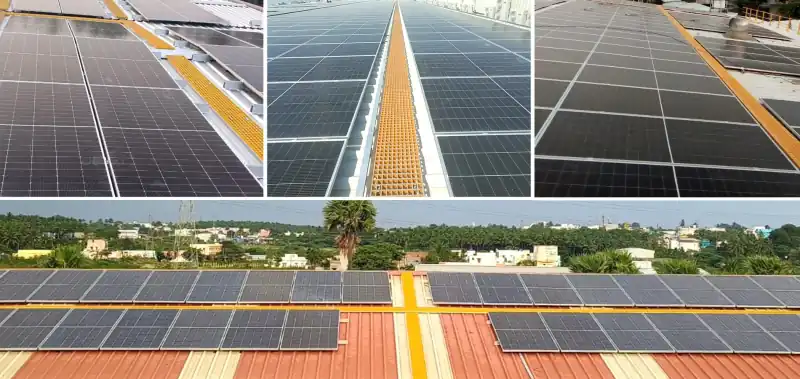
Introduction: Why Industries Are Switching to FRP Gratings
Walk into any modern chemical plant, water treatment facility, or solar power installation today, and there's a good chance you'll find FRP gratings underfoot instead of traditional steel. This shift isn't a passing trend — it's a response to a very real, very expensive problem: corrosion.
Steel and metal gratings, while strong, are constantly under attack from moisture, chemicals, and harsh weather. Over time, they rust, weaken, and demand costly maintenance or replacement. FRP (Fiberglass Reinforced Plastic) gratings solve this problem at the material level, offering a combination of strength, safety, and longevity that steel simply can't match in corrosive environments.
As one of the established FRP grating manufacturers in India, VSL India (Venkateswara Suppliers Pvt. Ltd.) has been at the center of this shift, supplying industrial-grade FRP gratings for power, chemical, marine, and infrastructure projects across the country.
This guide breaks down everything you need to know about FRP gratings — what they are, how they're made, where they're used, and why they've become the preferred choice for engineers and procurement teams alike.
What Is FRP Grating?
Unlike steel, FRP grating doesn't rust, rot, or corrode — even when exposed to acids, alkalis, saltwater, or constant moisture. This makes it a long-term, low-maintenance alternative for flooring in demanding industrial settings.

Types of FRP Grating
- Moulded FRP Grating: Manufactured in a single mould where fiberglass and resin are cured together, producing a grating with equal strength in both directions. Ideal for heavy-load, high-traffic areas.
- Pultruded FRP Grating: Made using continuous fiberglass rovings pulled through a resin bath and shaped into profiles. Offers higher strength-to-weight ratio and is typically used where directional load-bearing is a priority.
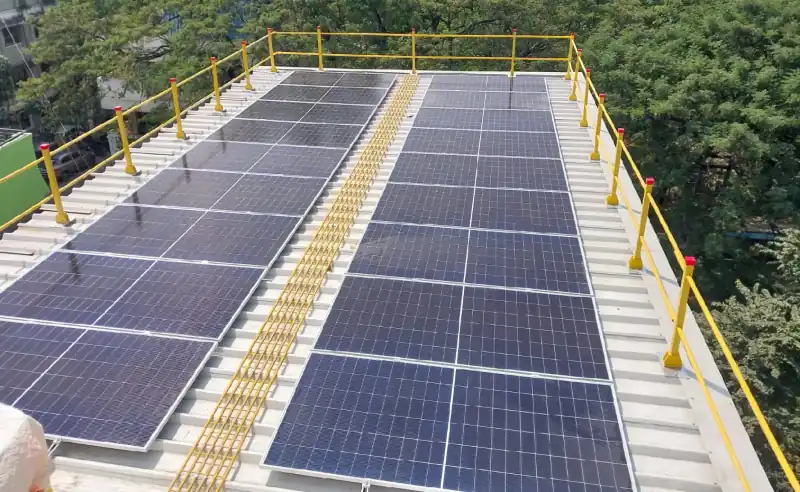
Key Benefits of FRP Gratings
Corrosion Resistance: FRP gratings do not rust or degrade when exposed to chemicals, moisture, or coastal air — making them ideal for chemical plants, wastewater facilities, and marine environments where steel would fail within a few years.
Lightweight Yet Strong: FRP grating is significantly lighter than steel, which reduces structural load on supporting frameworks and makes installation faster and safer, with less need for heavy lifting equipment.
Non-Conductive and Spark-Free: Because FRP is electrically non-conductive, it's a safer choice for power transmission utilities, substations, and any facility where electrical insulation is a safety requirement.
Anti-Slip Surface: Most FRP grating panels feature a textured or grit-coated top surface, providing reliable slip resistance even in wet, oily, or icy conditions — a critical safety factor for walkways and platforms.
Low Maintenance, Long Service Life: With no rusting or corrosion to manage, FRP gratings typically last over 20 years in harsh industrial environments with minimal upkeep — translating into significant lifecycle cost savings compared to steel.
Design Flexibility: FRP grating can be custom-manufactured to specific dimensions, load ratings, and mesh patterns, making it adaptable to a wide range of project requirements.

Common Applications of FRP Grating

FRP Grating vs. Steel Grating: A Quick Comparison
| Factor | FRP Grating | Steel Grating |
|---|---|---|
| Corrosion resistance | Excellent | Poor (rusts over time) |
| Weight | Lightweight | Heavy |
| Electrical conductivity | Non-conductive | Conductive |
| Maintenance | Minimal | Frequent (painting, rust treatment) |
| Installation | Faster, easier | Labour-intensive |
| Lifespan in corrosive environments | 20+ years | Significantly shorter |
| Upfront cost | Slightly higher | Lower |
| Lifecycle cost | Lower overall | Higher due to maintenance |
How FRP Grating Is Manufactured
- Fiberglass Reinforcement – High-strength fiberglass strands are laid out in a mould to form the structural base.
- Resin Infusion – Thermosetting resin is applied to bind the fiberglass into a solid composite matrix.
- Moulding – The material is cured under controlled temperature and pressure to form consistent, dimensionally accurate panels.
- Quality Inspection – Each panel is checked for strength, dimensional accuracy, and compliance with safety standards before dispatch.
This process ensures every panel delivers consistent load-bearing performance and a long, reliable service life.

Choosing the Right FRP Grating Manufacturer in India
Not all FRP gratings are made equal. When evaluating a manufacturer, look for:
Proven industrial experience across sectors like power, chemical, and infrastructure
Customization capability for load ratings, panel size, and mesh pattern
Quality resin systems (polyester, vinyl ester, or phenolic, depending on application)
Compliance with safety and load standards
After-sales technical support for installation guidance
VSL India manufactures a full range of FRP products — including FRP gratings, moulded grating walkways, handrails, ladders, manhole covers, and structural profiles — built for corrosion resistance and long-term reliability across power, solar, chemical, and infrastructure applications.
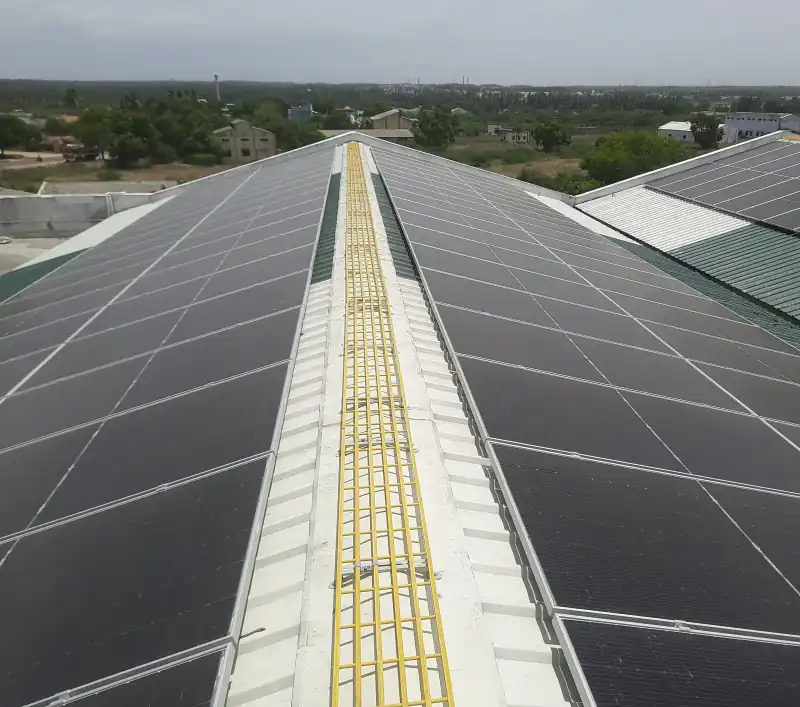
Conclusion & Product Range
FRP grating has moved from being a niche alternative to becoming the industry standard for flooring and walkways in corrosive, wet, or electrically sensitive environments. Its combination of strength, safety, and low lifecycle cost makes it a smart long-term investment for power plants, chemical facilities, solar installations, and infrastructure projects across India.
VSL India manufactures a full range of FRP products — including FRP gratings, FRP moulded grating walkways, FRP handrails, ladders, manhole covers, and structural profiles — built for corrosion resistance and long-term reliability across power, solar, chemical, and infrastructure applications.
Evaluating FRP Grating Manufacturers in India for Your Project?
VSL India offers industrial-grade FRP gratings engineered for durability, safety, and performance — backed by an established manufacturing process and pan-India project experience.
Explore FRP Grating Products & Request Quote →Frequently Asked Questions
How long does FRP grating last?
FRP grating typically lasts 20+ years in industrial environments, depending on the application and exposure conditions — far longer than steel in corrosive settings.
Is FRP grating safe for wet or oily areas?
Yes. Most FRP grating comes with a textured, anti-slip surface specifically designed to maintain traction in wet, oily, or icy conditions.
Can FRP grating handle heavy industrial loads?
Yes. Moulded FRP grating, in particular, is engineered for equal-strength load bearing and is widely used on heavy-traffic industrial platforms and walkways.
Why choose FRP grating over steel in chemical plants?
Because FRP doesn't corrode when exposed to acids, alkalis, or chemical fumes, it eliminates the recurring maintenance and replacement costs associated with steel corrosion in these environments.
Can FRP gratings be customized?
Yes. Reputable manufacturers like VSL India offer custom dimensions, mesh patterns, colors, and load ratings tailored to specific project requirements.
Contact VSL India for FRP Gratings
Business Hours
Mon - Sat: 9:00 AM - 6:00 PM